| Format: | LP |
| Availability: | In stock |
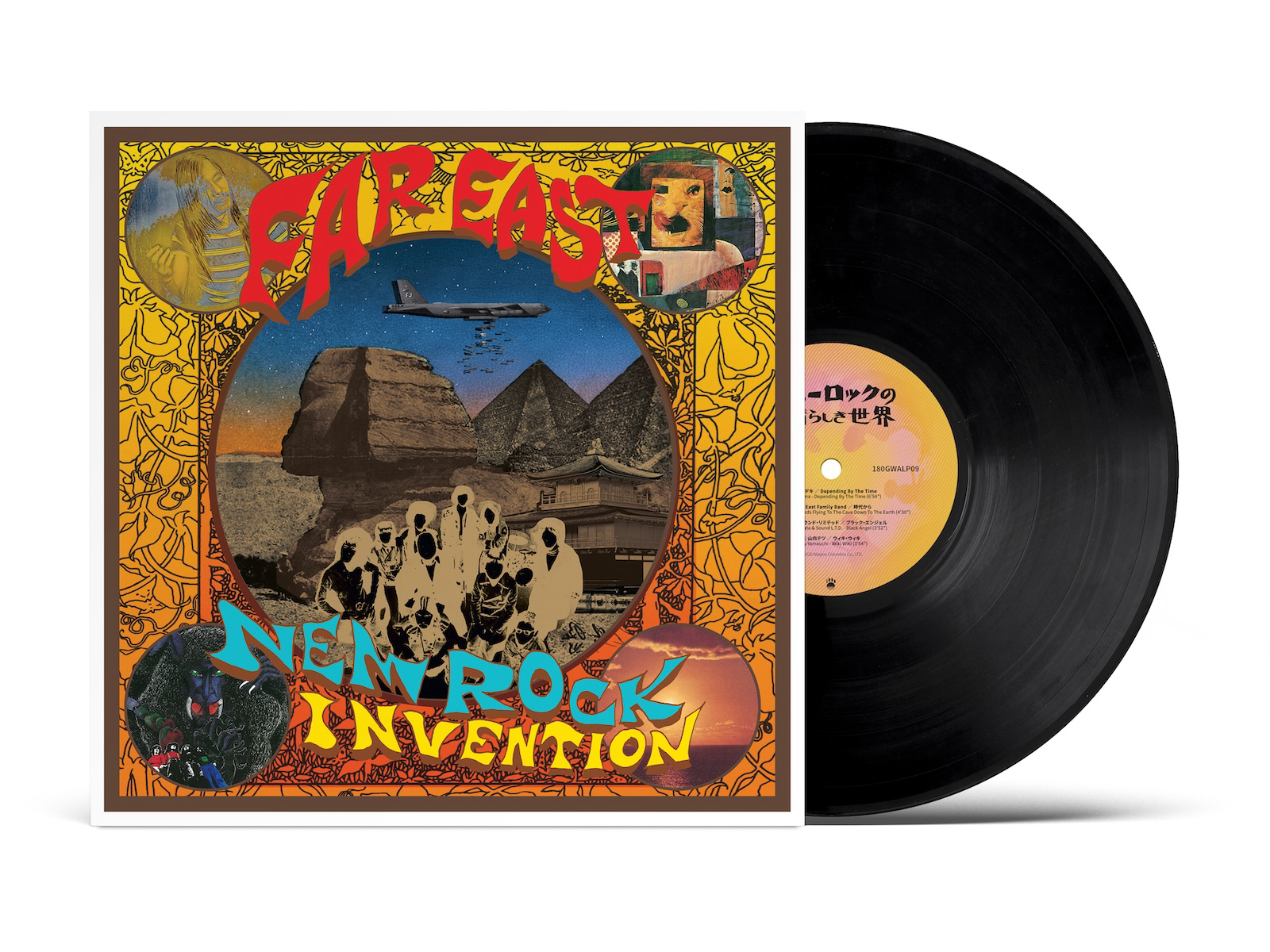
Freedom, rebellion, and defiance — The rock/psych rock revolution that tore through Japan in the early 1970s! Fully licensed Nippon Columbia masters. Includes track by track liner notes by Sally Kubota. Mastering and lacquer cut by Jukka Sarapaa at Timmion Cutting Lab, Helsinki, Finland. 180g heavy vinyl pressing, reverse board jacket.
The Jimi Hendrix track 'If 6 Was 9', famously used in the 1969 film Easy Rider, declares:
"Now if six turned out to be nine
I don't mind, I don't mind,
If all the hippies cut off all their hair
Oh, I don't care, oh, I don't care
Cause I got my own world to live through
And I ain't gonna copy you"
Setting his guitar on fire and smashing it to pieces as if to speak for the distrust, confusion, and pain felt by young people at the time, Jimi Hendrix embodied a form of music utterly unlike the existing music industry — music that asserted freedom on its own terms.
What strikes me again, even now, is that rock from the late '60s through the early '70s remains the most compelling — whether Western or Japanese. In the mid-1960s, British groups like The Beatles and The Rolling Stones swept across the globe, while in the United States Bob Dylan famously swapped his folk guitar for an electric one, igniting the folk-rock movement. From the surge of new energy among young people in Britain and America — entwined with hippie culture, drugs, and the radical momentum of the anti-Vietnam War movement — an extraordinary body of rock music emerged, ushering in what would become the golden age of rock in the 1970s. In Japan, from around 1968, record companies began grouping these sounds under the label "New Rock," introducing domestic releases of Western rock to Japanese audiences.
At the time, Japan was in the midst of the peak GS (Group Sounds) boom – a sound that fused Japanese kayōkyoku music and Western rock music. But possessing a rare sense of foresight, singer and record producer Yuya Uchida encountered this revolutionary new wave of rock firsthand during his travels through Europe beginning in the spring of 1967. After returning to Japan, he formed Yuya Uchida & The Flowers. Their freaked-out sound — steel guitar driven through wah pedals and fuzz — marked them as something entirely different, standing apart from conventional GS acts. Other groups also added British and American rock numbers to their repertoires, but because their shows and releases were fundamentally bound to the structures of the Japanese entertainment industry, most had few options once the GS boom faded: they either shifted toward a strictly kayōkyoku-style path or disbanded altogether.
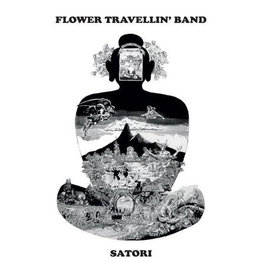
Even so, in 1970, The Flowers, now joined by Joe Yamanaka, formerly of 4.9.1, and Hideki Ishima, formerly of The Beavers, renamed themselves Flower Travellin' Band and went on to make their mark overseas. At the same time, other key musicians from the GS generation — including Shigeru Narumo of The Fingers and Hiro Yanagida of The Floral — fought to establish a distinctly Japanese form of rock music. Meanwhile, folk music driven by young anti-establishment artists began to rise out of the underground scene, gradually influencing the mainstream. As a result, record companies one after another launched dedicated rock and folk labels, signaling a major shift in the industry.
In 1972, Nippon Columbia launched its first dedicated rock and folk label, Propeller, releasing a steady stream of forward-looking titles by artists such as Hiroshi Segawa (formerly of The Dynamites) and Tetsu Yamauchi, who, up until then, was a prolific session musician in the scene. Influenced by late-'60s acts like Blood, Sweat & Tears and Chicago, Japanese jazz musicians also began boldly incorporating rock elements into their work. As a result, many records from this period have since become prized classics in the rare groove scene.
Above all, this compilation was selected to let you experience the free, innovative, and deeply experimental sounds created by Japanese musicians whose passion rivaled that of their British and American counterparts. Even more than fifty years later, the music on this album still feels remarkably fresh, hitting with the same sense of surprise and impact it did when it was first released!
(Words by Sally Kubota)