| Format: | LP |
| Availability: | Out of stock |
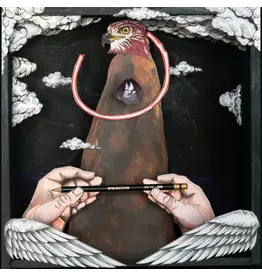
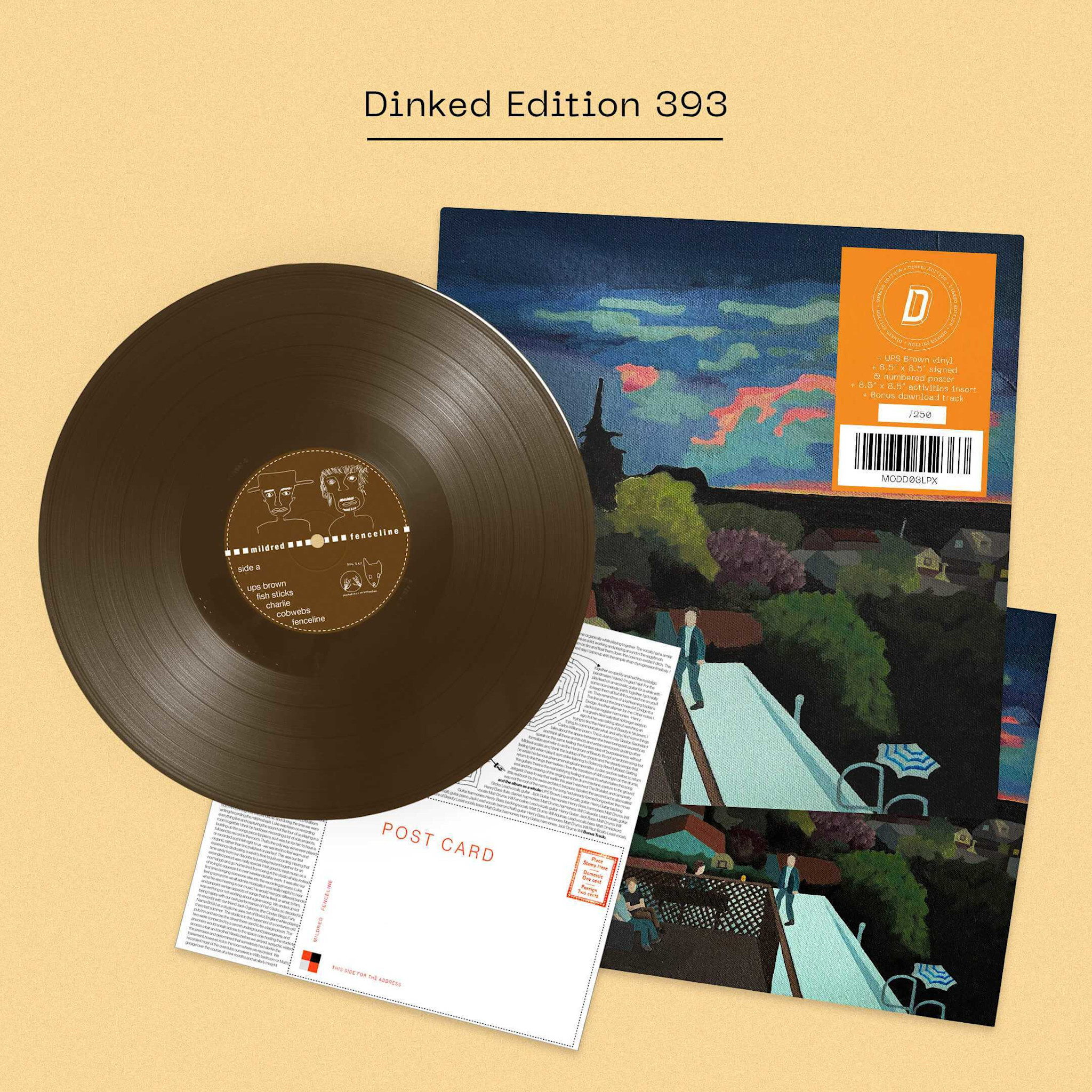
UPS Brown vinyl. 8.5” x 8.5” signed & numbered poster of front cover painting. Additional 8.5” x 8.5” poster with postcard, origami van, maze, horoscope embedded. Bonus track download (QR code on poster). Limited pressing of 250.
Mildred is a band from Oakland, CA of four equal parts. They don’t have a lead singer, no one person writes the songs. The songs that make up their debut album Fenceline come together as a group with their genesis sprouting from any one of their members each time. This isn’t a case of Henry (vocals, guitar), Jack (vocals, guitar), Matt (vocals, bass, woodwinds) or Will (drums, production) sauntering in and slapping their latest offering down on the table to be fleshed out as they see it in their mind though. Mildred have a quieter, sweeter process. The songs are often wrestled from the lead writer by the other three, a lyric might have been mumbled absentmindedly for a few days before one of the other three grabs at it, forcing the lead writer to focus on something great they had come up with without really noticing. If you ask any Mildred member what their favourite part of Fenceline is, it will never be something they wrote. If you pin them down and ask them what their favourite part of something they did write was, it will always be something somebody else added to it.
This is what makes Mildred - in many ways a classic four piece - so special. This wonderfully easy bond between four friends just hanging out and writing songs is so palpable it’s intoxicating. Summed up neatly by Clash Magazine saying, “imagine if Pavement went Americana and you’d be close”, Mildred make music that is pure and poetic, gently addictive and never overwrought. They describe the creation of the band as being born from “deciding that playing/talking about/thinking about music together is fun and something we want to structure our lives around as best we can”. Mildred is a vehicle for these four people to continue to spend time in each other’s company, encouraging whatever phrase one of them might have been humming to be explored as fully as possible, nurtured into something tangible. Most bands are formed so they can get out of whatever diy space they start out playing in, Mildred was formed so they can spend more time there.
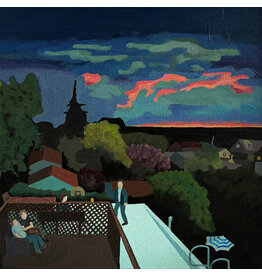
The space in question for Mildred is a house. The Ward St. house in Berkeley to be exact, already a landmark in Mildred lore. When Fenceline began taking shape Henry, Jack, Matt, and occasionally Will were living there together; Matt hunkered in an “extra-legal” room in the attic where he bathed on his knees and Henry and Will would have to stoop to visit. Jack and Henry shared a wall in adjacent shoeboxes on the middle floor, Henry staring directly out at an old walnut tree they nicknamed Walter. Will was away studying in the desert but would stay whenever he was in town. While living on Ward St. they would write songs in the porous space between the kitchen and the living room after dinner, before they even knew they were a band. A drum set, guitars, and Matt’s woodwinds were always strewn about. After that they would go up to the roof - beautifully painted by Jack for the cover of Fenceline -, Jones the cat often creeping up the stairs curiously behind, and talk the songs over some more, or just continue hanging out, talking about whatever. (The Mildred core belief system goes as follows: “talking about the weather is a legitimate and profound form of human discourse and exchange. So is talking about grocery stores and produce prices. Front lawns are too tidy, let them grow. Free associating is one of life's great pleasures. We believe in the reality of pathetic fallacy. The crunch wrap supreme is the pinnacle of modernity.”).
This is what makes the songs on Fenceline hang together, naturally, as roommates do. These four people are very different in many ways. Jack is a PHD student, often working underground, studying the atom beyond any conceivable point. Will is an environmental lawyer. Matt is an architect, a job he took up properly after a year in a Benedictine monastery. Henry works in affordable housing, helps his dad grow beans, and plays a lot of basketball. The lyrics for their songs are written largely alone and often draw from their own individual lives and experiences but there’s a shared something there. “It makes sense when common threads emerge” they say, “because we do things together a lot as friends: cook, laze about on a weekend, listen to an album, go walkabout, read, go see movies etc. People will tell us after seeing us live that we’re, “like… a real band.” There’s maybe a shared rhythm and camaraderie in our lives that comes through in the music.”
That shared something takes many forms; flaming pinecones floating down the river, scattered papers and dog-eared books, exhausting party conversation and Irish goodbyes, leaves the colour of UPS trucks. Songs often take place across whole days: long days working at Henry’s aunt and uncle’s farm, an afternoon down in San Francisco on the day the sailors come in and booze all day in their cracker-jack uniforms, one of those youthful afternoons that seemed to stretch forever. Others stem from a shared love of a good reference; breadcrumbs dropped from old favourite books, songs and poems, or Matt’s favourite little red book on architecture, waiting to be found by those who love to go over lyrics with a fine-toothed comb. Strikingly literal or intriguingly oblique, Mildred have a remarkable way with lyrics that lodge themselves in your head softly but with such determination that they begin to feel like shimmering memories from your own life. Fenceline is a collection of songs that you want to hold close and delve into, and yet play to everyone you know.
While the lyrics were largely written in and around the Ward St. house, the fleshing out of the songs had to take place elsewhere. The house was owned by septuagenarian slumlord Suzanne, along with 17 others in various states of decay across Oakland. “She drove around in a BMW, with red lipstick smeared on and beyond her lips, and thick black sunglasses” the band recall, “one time she made our friend get down on his knees on the curb and bend over to sign his lease on the passenger seat.” When the band called her one day to let her know that the makeshift sauna they had built in the backyard had gone up in flames and set fire to Walter the tree, she didn’t even call them back. That kind of landlord. Suzanne eventually did catch wind of Matt’s secret bedroom though and that was enough to stir her into action. She called them “matricidal felonious degenerates” and asked if they would inflict such horrors on their own mothers, threatening to lock them out in the next 24 hours. They managed to stay until the end of the month, but Ward St. was no more.
Fleshing out the songs written in Ward St. was therefore largely done in Matt’s new abode. He moved in with a handsome but fragile 97-year-old ex-lawyer/taxi driver who likes to chat about baseball and has a sizable garage. He didn’t mind the band setting up there in the evenings and they would power up a bunch of big stage lights Matt found in a dumpster and play. “They make the room feel atmospheric in a way that borders on over-the-top corny/comical” Mildred say, “often when the lights come out is when our practices devolve into heinous nonsense:bad spoken word, screaming, impersonations etc.” In amongst this heinous nonsense the songs took on their final forms, a lot of that atmosphere creeping into their makeup. Mildred’s songs have a magic that makes them feel like they were purposely written for whatever time of day or time of year you’re listening to them in, maybe a result of this liminal space where they were finalised, maybe just the sign of great songs.
For recording, the band took a week off work and decamped to Luke Temple’s studio in Pasadena, having all been carried through the pandemic by his 2019 album Both-And. Thrilled by the prospect of a full week of just playing music together rather than squeezing in around work, they recorded live together in the room, the only way they know how.
The sound that emerged is warm and organic rather than polished or ‘perfect’. Mildred slip effortlessly into grooves and perfect harmonies on songs like ‘Charlie’, ‘Fenceline’ and the extended rolling free association of ‘Mumblecore Melody’ while on the like of ‘Cobwebs’ with its racing pulse and distant, roomy vocals or closer ‘Hardcore of Beauty’ which tumbles from steady drum-machine languor into yelping, shouting crescendo, you can hear the thrill of more left-field ideas taking shape live in the room. When the recording week had finished, only one song didn’t feel quite right, ‘Fish Sticks’.
Ahead of Fenceline, Mildred have just released their debut twin EPs mild and red, a collection of songs impossible not to play over and over in a startling way considering they were created before Mildred even knew they were a band, with no thoughts beyond just messing around back in Ward St. Arriving purposefully on the scene in that gentle, approachable Mildred way, the EPs picked up support from The Guardian, The Line of Best Fit, DIY, Uncut, The New Cue, Clash, Brooklyn Vegan and more. In amongst the release, they also played made their debut on UK shores with a headline show at The Windmill in Brixton (during which they took a blackout well in their stride with some rip-roaring acapella fun), as well as playing at London’s The Shacklewell Arms and Bristol’s The Louisiana.
While in Bristol with a free afternoon, Mildred took ‘Fish Sticks’ to a friend, Jack Ogborne aka Bingo Fury (The Cindys, Naima Bock), to give it another go in his studio in the basement of a centuries-old pub across the street from what used to be a prison, with a secret passageway connecting the two. It’s not easy to tell that ‘Fish Sticks’ has a very different recording setup as it settles so comfortably in with the rest of Fenceline; but the change of scenery gave it new life and a final product - an endlessly repayable distillation of the Mildred sound with a central guitar line for the ages and irresistible harmonies - that they all liked so much it became the lead single.
A bit of tinkering, overdubs and a beautifully cohesive final mix from Will followed by mastering from GRAMMY nominee Jason Mitchell, and Fenceline was finished.
The title track, and album title, in part stems from long drives (Mildred’s music is perfect for long drives). In the US you can’t drive anywhere for any length of time without seeing an ‘Adopt-a-Highway’ sign. “It’s some sort of state program whereby businesses/individuals sign up to clean a portion of a highway a couple times a year in return for roadside advertisement” Henry explains, “I had the line “I’m adopting a highway... just to try things my way” and then an image of a narrator “adopting” a stretch of highway, not out of civic duty, but as a petty way to remain in someone’s mind, knowing they’ll have to drive past the signs over and over again”.
This is a perfect example of the kind of songwriting that makes Mildred already feel timeless. Ordinary - everyday, even - objects from daily life looked at in such a way as to change the way you see them forever. Songs dance back and forth over the line between crystal clear snapshots of the real world and hazy poetic embellishment, to create a dream-like version of life that is both intensely relatable and tantalizingly out of reach. It’s hard to put your finger on exactly what it is about this band that makes the atmosphere they conjure so enticing but it’s impossible to step away from.