| Format: | 2LP |
| Availability: | PRE-ORDER |
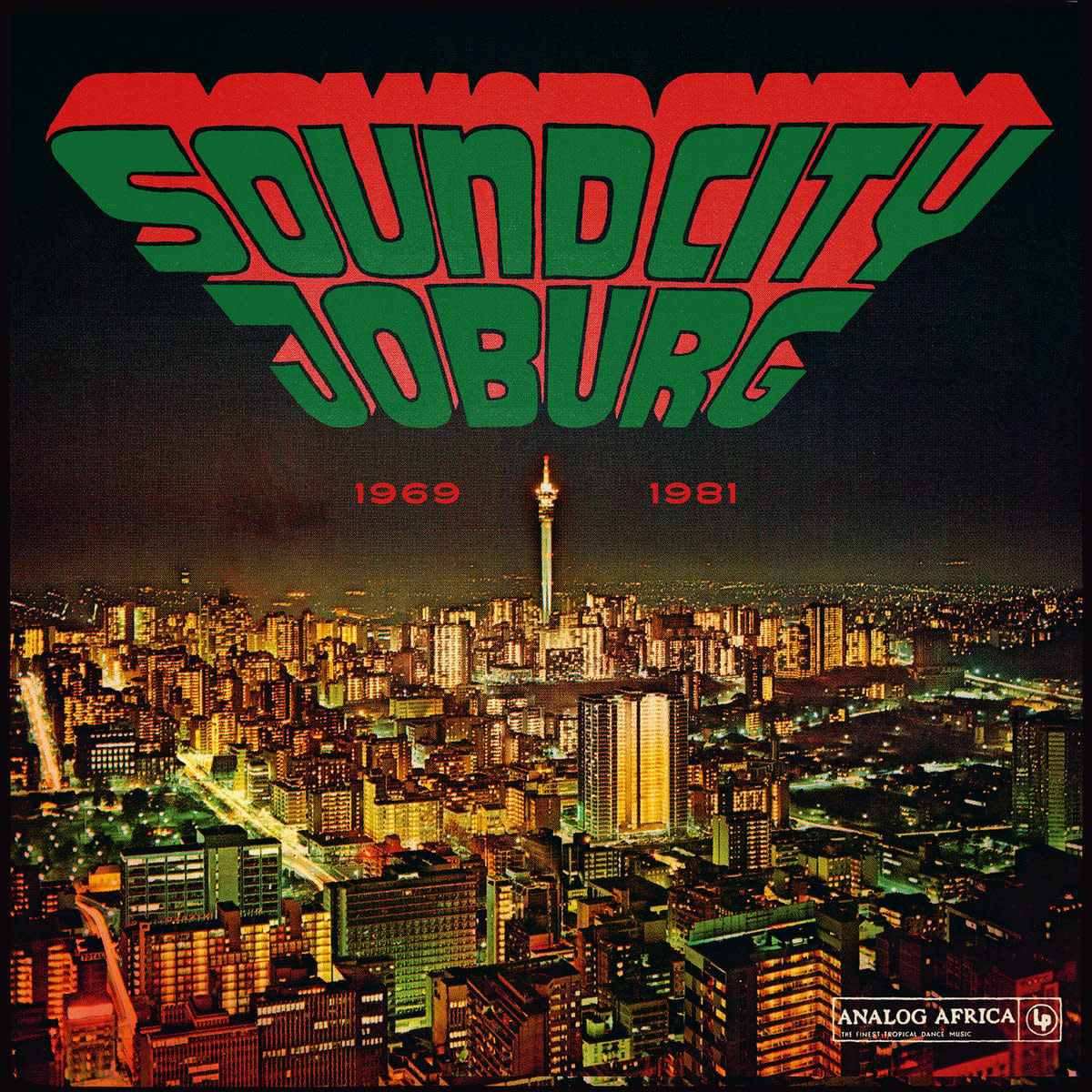
Deluxe 2xLP edition housed in a gatefold cover, with 16-page magazine-size booklet packed with rare photographs, vintage newspaper articles, biographies, and archival material.
It feels as if it were yesterday.
I had just landed in Frankfurt after returning from a record safari to Johannesburg. As soon as I got home, I put one of the promising South African records I had found on the turntable and jumped into the shower.
In the middle of getting all soaped up, the record player suddenly started making crazy loud noises, as if someone were hitting the needle with a hammer. I ran out in a panic, dripping wet, to see what was going on, and what I discovered was quite astonishing.
We are in 2002 and Dan Ojwang a Kenyan friend, living in Johannesburg had recommended that I check out a record store whose name I can no longer remember. What I do remember is that it was directly across from the Market Theatre in Newtown. That store had thousands of vinyl records, and many of the ones I bought were discarded SABC (South African Broadcasting Corporation) library copies, especially records from the apartheid-era Radio Bantu Diskoteek — SABC’s African-language record library. Many had been stamped “SABC Cancelled”, indicating that they had been removed from the broadcaster’s collection — and that is most likely how they ended up in the store.
During the apartheid years, the SABC operated its own internal censorship system, reviewing records intended for airplay and marking — and often physically damaging — songs it considered unsuitable for broadcast.
The methods used to make those songs unplayable was something to behold. The brilliant idea, apparently, was to take a utility knife, razor, nail, or whatever sharp object happened to be at hand, and make a deep cut straight into the vinyl. The noise I had heard while taking a shower? That was the needle crashing into one of those cuts.
I also remember being surprised by the markings on the sleeves. Some carried stickers saying “Avoid”, while others had handwritten notes in Afrikaans such as “nie goed nie” (no good) or “afgekeur” (declined). Still others were marked “banned”, “not available”, “restricted” or “not suitable”. If I ever needed an example of what apartheid meant from the perspective of someone who loves music, there it was, carved directly into the grooves of a record.
It also explains why these records cost no more than a dollar or two and, to be honest, at the time I had no idea what I was buying. I was selecting them according to the artwork, but the labels were often the biggest clue. Anything with “City Special”, “Soul Jazz Pop” or “Atlas City” on it was coming home with me.
A number of the songs I discovered in Johannesburg eventually became the foundation of this compilation. In particular, “How Long?” and “Take It” — which luckily made it through the censors — stayed with me from the first moment I heard them and, over the years, became the tracks around which this project began to take shape.
Although that find in Jo`burg was important, most of the songs on this compilation were actually found in Zimbabwe, a country I travelled to frequently between 2001 and 2005, when Analog Africa was going to be a label devoted entirely to Zimbabwean music. While digging there, I came across many of the tracks that would eventually find their way onto Sound City Joburg. Little by little, the project began to take shape across borders and across the years.
To complete the picture, I reached out to collectors Roger Joffe, Chris Miller and Daniel Marire and asked whether they had any special tunes they thought I should hear. That final round of recommendations brought “Crazy Baby”, “Soweto Sporo”, “Swing Africa”, “Sana Lwam” and “Kiba” into the fold.
So what do all these songs have in common, if anything? For one, they are all excellent songs — that’s a given — but they are also mostly mixtures of soul, funk and disco, blended with Afrobeat, jazz and reggae, and all wrapped up in a coat of African flavours, which is exactly the stuff I was looking for.
To understand more about the scene, it was time to follow the music back to Johannesburg, and we decided to send our special envoy, Volkan Kaya, to South Africa. There he joined forces with legendary musician Lulu Masilela, and together they began criss-crossing the townships in search of the musicians, producers and voices behind these recordings, slowly piecing together the context of this compilation. And this, in a nutshell, is that story:
“During the 1960s and 1970s, American soul and funk crossed the Atlantic Ocean, landed on South Africa’s fertile shores, and found a new life in the hands of local musicians. Inspired by sounds arriving through records, radio and travelling musicians, a young generation began experimenting, fusing these seemingly alien influences with traditional rhythms, jazz and local dance music.
What emerged was a uniquely South African sound they dubbed Township Soul — an umbrella term for a myriad of musical styles, some of which had no names yet. This wasn’t imitation. Musicians absorbed those influences and bent them until they belonged to Johannesburg.
Across Joburg, every township had its champions and nearly every neighbourhood its own bands. Alexandra moved to the sounds of The Movers, The Flaming Souls, The Anchors and The In-Laws, while Soweto answered with groups such as The Beaters — later known as Harari — The Care Frees and The Young Ones.
Competition was fierce, and for many artists arriving with little more than their instruments and dreams of fame, breaking into the city’s music scene was a gamble. Facing police harassment, apartheid pass laws and curfews, they risked everything; yet, driven by ambition, they kept going, unable to resist the pull of music.
At night, the scene came alive.
Bands performed in shebeens, garages, driveways, community halls, theatres and clubs, while larger acts graduated to stadiums and nationwide tours. Performances regularly stretched deep into the night, sometimes until sunrise. The legendary 6-to-6 gigs became known as akulalwa — literally, “no sleeping at the gig” — as tightly packed audiences demanded that the music continue.
Centred around record labels, recording studios and performance venues, and driven by a generation of visionary producers, Johannesburg — also known as eGoli, the City of Gold — became a melting pot of musical ideas. Musicians competed, collaborated, changed bands, shared techniques and pushed one another forward.
A tightly connected network of producers, talent scouts, record shops, studios and live venues allowed a remarkable new urban sound to take shape. Among the most influential figures behind the scenes were the producers and talent scouts known as the Big Five: Rupert Bopape, Hamilton Nzimande, Strike Vilakazi, David Thekwane and West Nkosi. Working between township musicians and major record companies, they discovered artists, shaped recordings and helped define some of the most important sounds of the period.”
With the help of collector extraordinaire Vusi “El Metalo” Hlatywayo and writer Sam Mathe, we gathered a treasure trove of articles that helped us piece together the story behind the music. Sound City Joburg brings that history together through a selection of rare recordings and a 16-page magazine-format booklet filled with photographs and stories of the musicians who made them.